
What is the actual fuel consumption of a boat? The answer isn't simply 'X liters per hour'. ⛽⛵
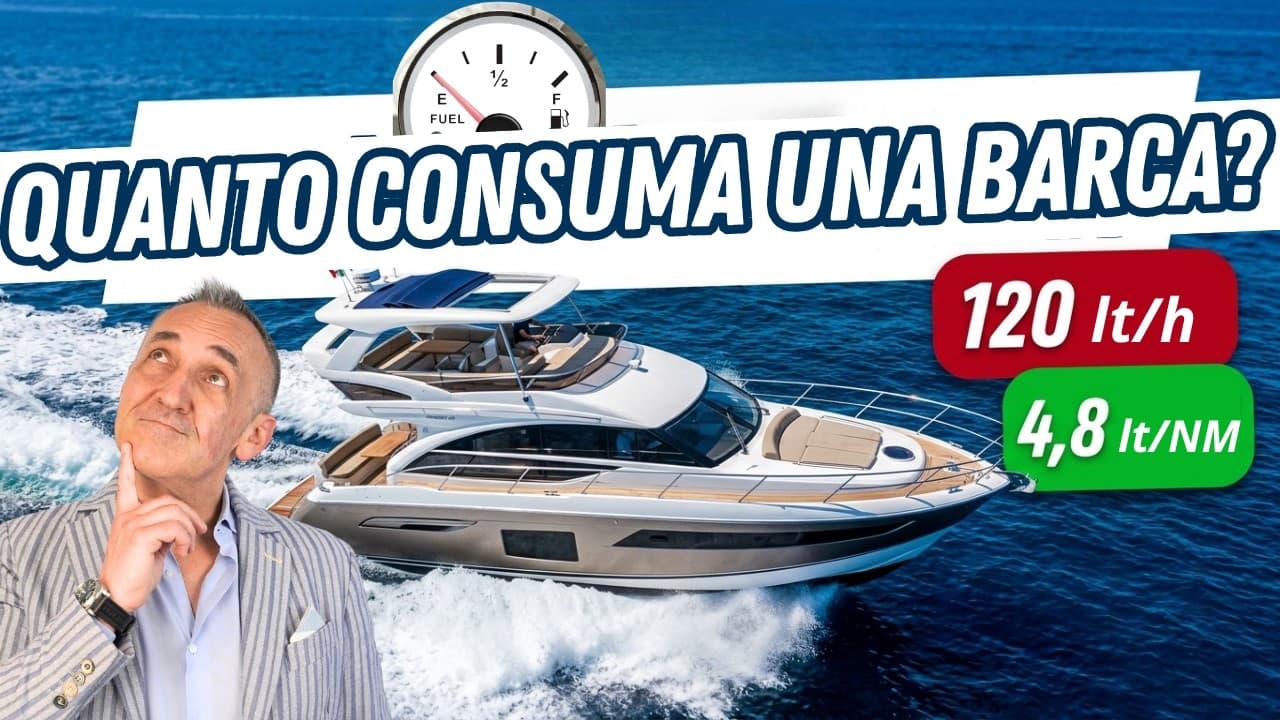
Fuel consumption of a vessel depends on the hull, engine, transmission, and especially the load. In this guide, we will see how to read these figures correctly and how much weight to give this data during the purchasing phase.
In the boating world, fuel consumption is usually expressed in liters per hour: 80, 100, 150 l/h. While this is accurate, the most useful comparison between two boats is their consumption per mile, similar to how cars are assessed in kilometers per liter.
consumption per mile (l/nm) = hourly consumption (l/h) / speed (knots)
An example clearly illustrates the difference: Motorboat: hourly consumption 120 l/h, speed 25 knots, time for 25 miles 1 hour, liters for 25 miles 120 liters. Sailboat (with sails furled): hourly consumption 7 l/h, speed 6 knots, time for 25 miles about 4 hours, liters for 25 miles about 28 liters. The sailboat, however, consumes much less, but the actual difference is far greater than what the hourly data suggests (7 vs. 120). The same applies to motorboats: two hulls with the same hourly consumption can have very different costs per mile if they travel at different speeds.
The system that transfers power to the water also affects consumption. In our experience, IPS transmissions consume on average 15-20% less than traditional shaft systems.
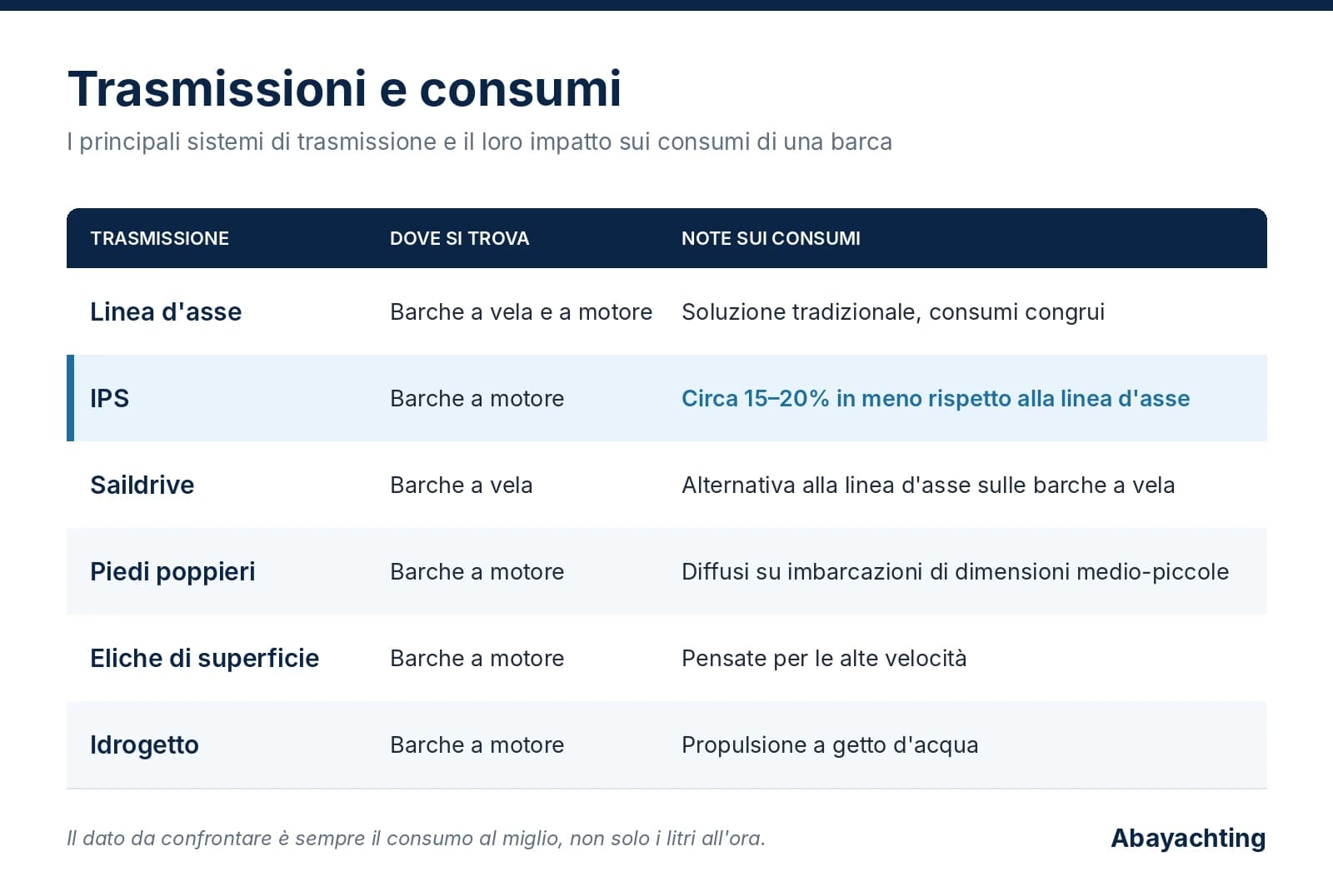
Consumption matters but should always be considered in relation to how you will use the boat. A yacht consuming 150 l/h doesn't mean you'll sail for eight hours every weekend; many outings are shorter trips with long anchor stays. If you spend many days onboard and often make long crossings, it's sensible to use consumption as a criterion during the purchase phase. For boats of the same type, the differences between one transmission or engine and another are usually not significant; installed power may matter more than the hull.
In summary To truly understand how much fuel a boat consumes, perform a comprehensive analysis: hull, speed, load, engine, and transmission. Then translate everything into fuel consumption per mile, the only figure that allows an honest comparison between different vessels. We also discuss this in our dedicated video. On the Abayachting YouTube channel, you can find a playlist entirely focused on buying and selling boats, with tips on what to do and what to avoid. On the website, you can find specs, photos, and videos of all the boats we have for sale: if you're considering a purchase, contact us for advice.
In summary
One email a month: the best articles and the boats just added to the catalogue. No spam.
The next step
Weigh up the running costs and let a dedicated broker guide you, from search to signature.