
The variables you need to know before buying
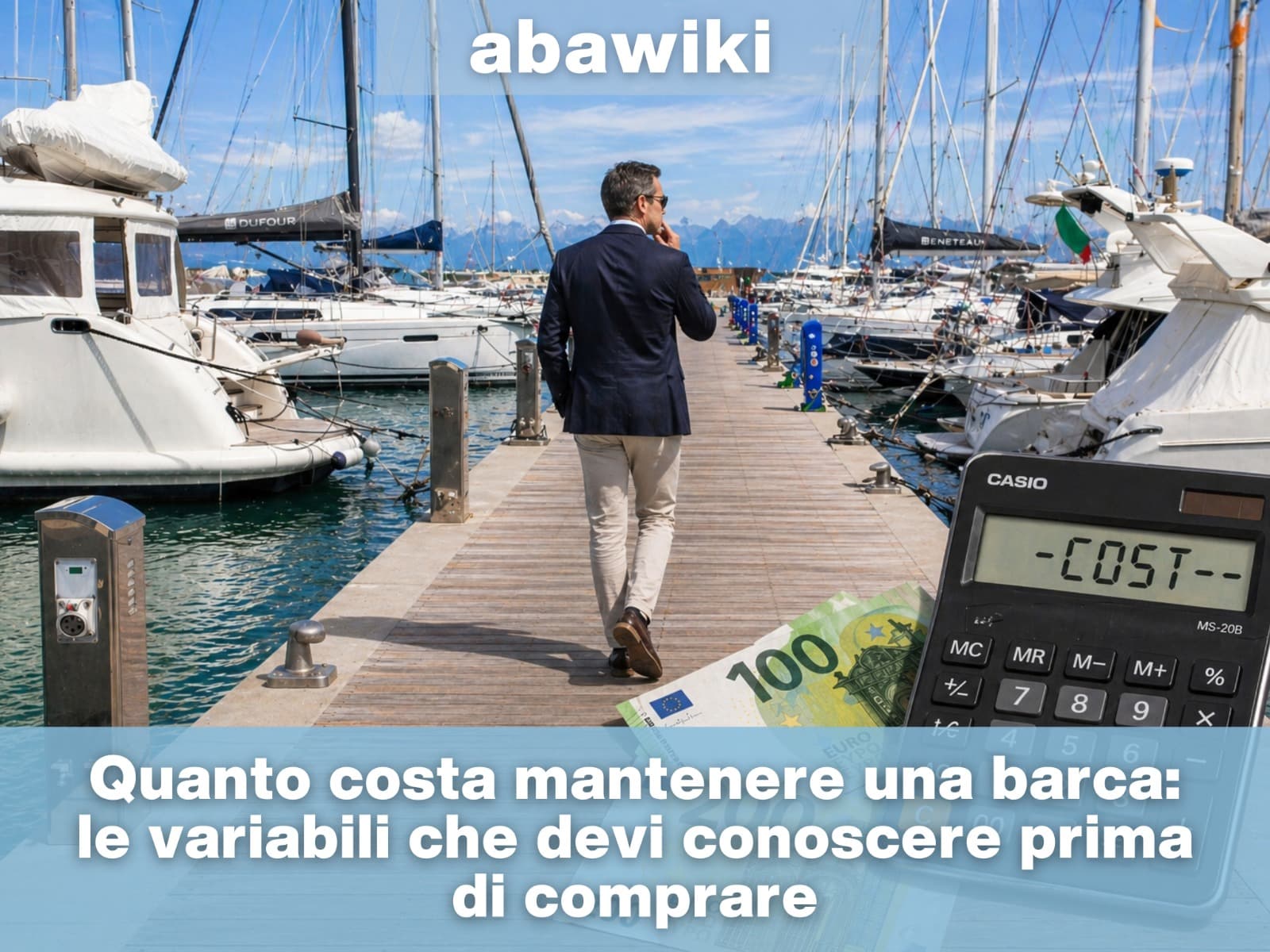
Those who buy a boat thinking only about the purchase price always make the same mistake. Not because the purchase price doesn't matter — it certainly does — but because it's just the first chapter of a story that unfolds year after year. Knowing the expense items that make up the maintenance of a vessel is not meant to scare you. It serves to make the right choice from the very beginning.
And making the right choice is exactly the difference between those who enjoy their boat and those who experience anxiety.
The first thing an experienced broker will tell you when you ask how much it costs to maintain a boat is this: it depends. It's not an evasive answer. It's the most honest answer you can give. It depends on the size of the vessel — every extra metre adds to every single expense item.
It depends on where you moor it — and in Italy, the difference between one port and another, even just a few kilometres apart, can be radical. It depends on how much you sail, how you sail, how skilled you are with your hands, and how much you rely on professionals. It depends on the type of boat, the type of engine, and the age of the hull. Anyone who gives you precise figures before knowing these variables is selling you air.
Those who know all of this, on the other hand, can build a realistic and personalised estimate with you.
The berth is the most predictable expense, but also the one that varies the most from area to area. Luxury marina, fishing port, Tyrrhenian coast, Adriatic, Ligurian: the differences are enormous and not always justified by the actual services offered. Before choosing where to moor, it's always worth making a serious comparison — not just on price, but on the cost-to-quality ratio of the facility, safety, access, and services. One often underestimated variable: the choice between seasonal and annual mooring. And the choice between keeping it in the water all year round or bringing it ashore during the winter months. This decision has both economic and technical implications.
When you're not sailing, the boat continues to cost. Winter storage — with everything it entails in terms of hauling, launching, movement, and occupied space — is an item that needs to be planned, not discovered at the end of the season. Those with private space for storage are at an advantage. Everyone else has to deal with costs that vary greatly depending on the facility, the area, and the size of the vessel.
Anti-fouling, zinc checks, hull cleaning, engine maintenance, minor electrical work, and onboard accessory maintenance. It's routine maintenance that determines the longevity of a vessel and preserves its value over time. Neglecting it to save money today means spending much more tomorrow — and ending up with a boat that is worth less on the market. Here, personal skills make a significant difference. Those who can work on the boat, even just for basic interventions, can keep this expense in check. Those who delegate everything to shipyards must account for proportionally higher costs.
Liability insurance is mandatory by law and covers damages to third parties. But stopping at mandatory liability means sailing uncovered on everything related to your own boat: accidental damage, theft, weather events, sinking. Yacht hull insurance is not mandatory, but for those who have invested in a valuable boat — or in a vessel purchased with financing or leasing — it is a choice that makes itself. The cost varies depending on the value of the boat, the type of navigation, and the declared experience of the operator.
Saving on insurance is the economy that can cost the most. Just a few hours of bad weather can make that clear.
For a sailing boat, fuel consumption is very low. For a motorboat, especially with significant engines, fuel can become the most significant item in the entire annual budget. It's not a variable that can be ignored during the selection phase — and the type of intended use profoundly influences the assessment. This discussion should also start to include hybrids. There are market options that use hybrid engines that can significantly reduce consumption.
A boat is not a car. It is a complex system that lives in a hostile environment. Unexpected events exist — it's just a matter of when, not if. A lost anchor, a winch that fails, an off-season engine breakdown, a cover that can't withstand a storm. Those who manage their boat with good planning always set aside a reserve for unexpected events. It's not pessimism. It's mature management.
If there's one concept worth insisting on, it's this: every extra metre of boat does not translate into a linear increase in expenses. It translates into a leap. Mooring, storage, maintenance, insurance, fuel — everything grows at a rate higher than the increase in length. This is why choosing the right size is probably the most important decision in the entire purchasing process. Not the biggest boat you can buy. The right boat for your actual use, your port, your sailing style.
Those who arrive at the purchase having truly understood how management expenses work are better owners. Not because they spend less — but because they are not caught off guard, they plan with clarity, choose the right vessel for their real possibilities, and enjoy the sea with a free mind.
The role of a broker is not to sell you the most expensive boat. It is to help you find the right one — and to build around it a sustainable management over time. Because the most beautiful boat is the one you can keep, care for, and truly use, year after year.
One email a month: the best articles and the boats just added to the catalogue. No spam.
The next step
Weigh up the running costs and let a dedicated broker guide you, from search to signature.